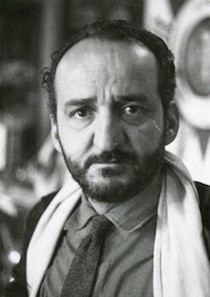
About Jawad Saleem
Jawad Saleem was born in 1919 in Ankara to an Iraqi family. He began his artistic education in Baghdad before continuing his studies in Paris and Rome, ultimately completing his training at the Slade School of Fine Art in London, where European modernism had a profound influence on his artistic development.
After returning to Iraq, Saleem became head of the Sculpture Department at the Institute of Fine Arts in Baghdad. Drawing on the artistic heritage of ancient Mesopotamia, he sought to create a distinctly modern visual language for Iraqi art. In 1951, he co-founded the Baghdad Modern Art Group, a landmark movement in the development of modern Iraqi art. His international reputation grew in 1952, when he became the only Arab artist to participate in a major exhibition at the Tate Gallery in London.
Jawad Saleem is best known for the Nasb al-Hurriyah (Freedom Monument), commissioned after the 1958 Iraqi Revolution. Combining the story of the revolution with visual elements inspired by Assyrian and Babylonian art, the monument has become one of the most iconic symbols of modern Iraqi art.
After returning to Iraq, Saleem became head of the Sculpture Department at the Institute of Fine Arts in Baghdad. Drawing on the artistic heritage of ancient Mesopotamia, he sought to create a distinctly modern visual language for Iraqi art. In 1951, he co-founded the Baghdad Modern Art Group, a landmark movement in the development of modern Iraqi art. His international reputation grew in 1952, when he became the only Arab artist to participate in a major exhibition at the Tate Gallery in London.
Jawad Saleem is best known for the Nasb al-Hurriyah (Freedom Monument), commissioned after the 1958 Iraqi Revolution. Combining the story of the revolution with visual elements inspired by Assyrian and Babylonian art, the monument has become one of the most iconic symbols of modern Iraqi art.
The Most Expensive Artwork
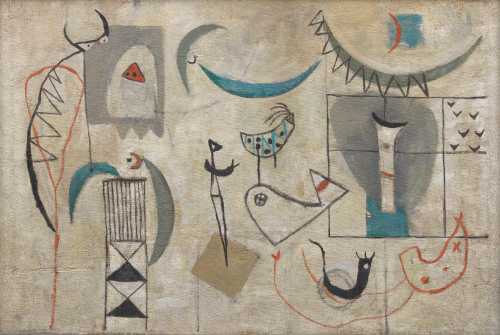
At Auctions
First Attendance
11 June 2020
# Attendance
14
# Artworks
42
Average Realized Price
128,146 USD
Average Min Estimate
40,168 USD
Average Max Estimate
67,098 USD
Sell-through Rate
75.61%
Average Growth of Artwork Worth
70.777%
Timeline
Modern & Contemporary Middle Eastern Art auction
21 July
Modern and Contemporary Middle Eastern Art Online auction
16 June
Modern & Contemporary Middle East auction
30 April
Modern & Contemporary Middle Eastern Art auction
25 November
Silsila: Highlights from the Dalloul Collection Including Modern and Contemporary Middle Eastern Art auction
6 November
Modern and Contemporary Middle Eastern Art auction
21 May
Shifting Gazes: Women Through Middle Eastern Eyes exhibition
15 April
American, European and Ukrainian Fine Art auction
8 December
Modern and Contemporary Middle Eastern Art auction
15 November
20th Century Art / Middle East auction
27 April
Modern and Contemporary Middle Eastern Art Including Baghdadiyat - Part III auction
23 November
Modern and Contemporary Middle Eastern Art including Baghdadiyat Part II auction
17 November
Modern and Contemporary Middle Eastern Art auction
24 November
Modern and Contemporary Middle Eastern Art auction
11 June