This article is available exclusively in Persian.
The Tehran Museum of Contemporary Art in the Midst of Revolution and War
1 August 2026
The Tehran Museum of Contemporary Art commenced its activities in 1977. Since then, Iran has witnessed significant political, social, and geopolitical upheavals. During certain periods, the Museum has actively engaged with society as an institution, while in others, it has maintained its distance as an artistic entity. The following text presents some of the Museum’s activities during the turbulent post-revolutionary era up to the present day.
Author(s)
Sevana Boghossian
Related Articles
The Suitcase as a Signifier of Displacement: The Artist Between Work and Movement
This text examines the suitcase as both a material object and a symbolic figure within the experience of migration, exile, and displacement—an object that, from the nineteenth century onward, gradually became a defining sign of forced travel and acquired a stable presence in artistic and museological narratives in the twentieth century. Focusing on the historical trajectories of Mar...
4 January 2026
On Art Activism
This text is a Persian translation of the article “On Art Activism” by Boris Groys, published in issue 56 of the journal e-flux in 2014. Groys examines art activism through the concept of aesthetization, critically rethinking the relationship between art, politics, and design. Situating his analysis within philosophical and historical debates that extend beyond modernity and narrati...
27 January 2026
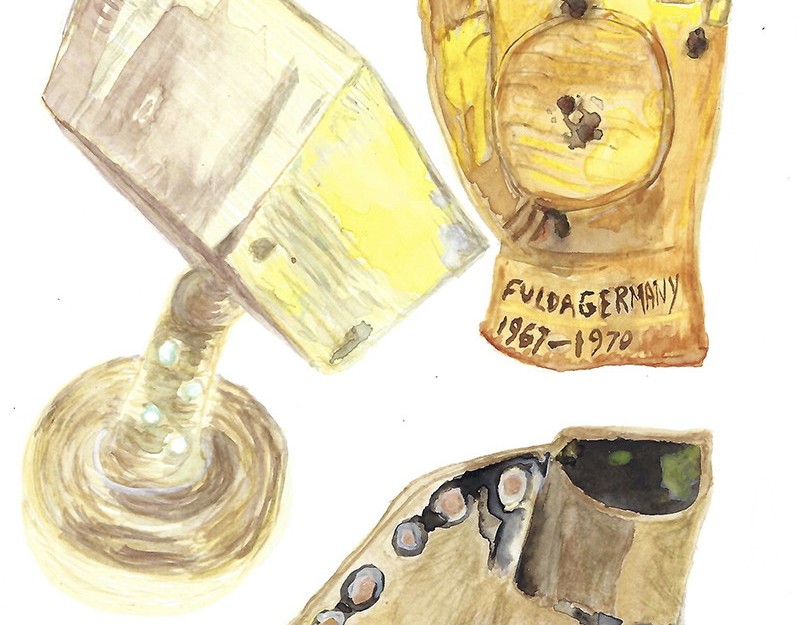
Trench Art: Black Humor, War Debris, Mud, and Peach Pit
Trench art refers to objects and handmade artifacts created during wartime, often using leftover materials such as bullets, shell casings, mud, wood, or even fruit pits. These works blur the boundaries between survival, memory, and artistic expression. Mary Walling Blackburn’s Wound, Whittle, and Peach examines these marginal forms through historical and theoretical perspectives, hi...
9 February 2026